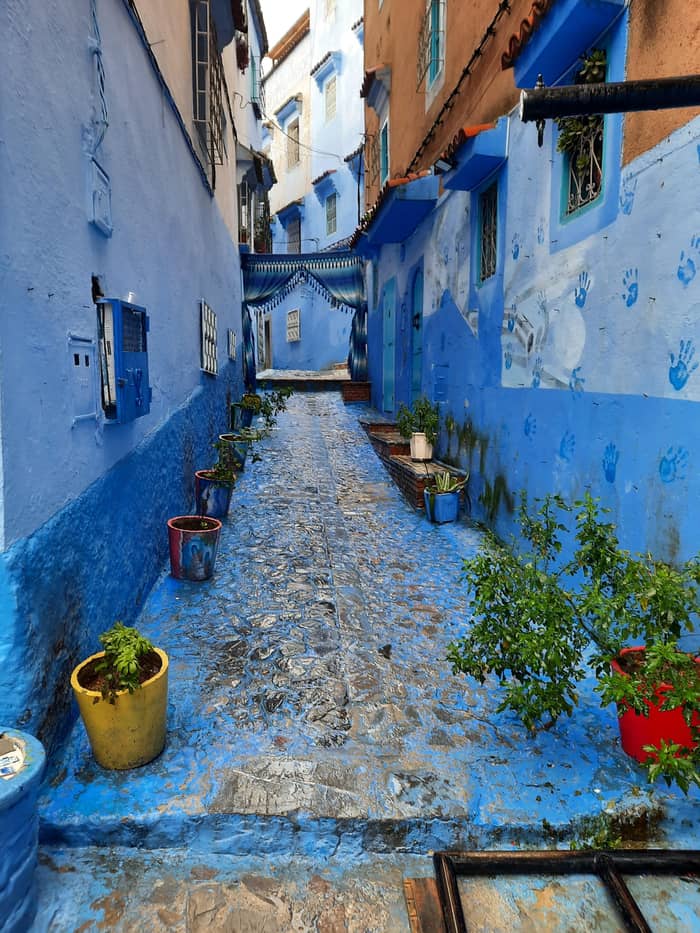
The day sold here
Combined day
Chefchaouen, then Tetouan
- Medina time1.5 hours
- Whole day11 hours
- From$68
Locate your stop
Find out about 15 stops
Pick a route and tap a pin or a stop: you get its note and a Google Maps link.
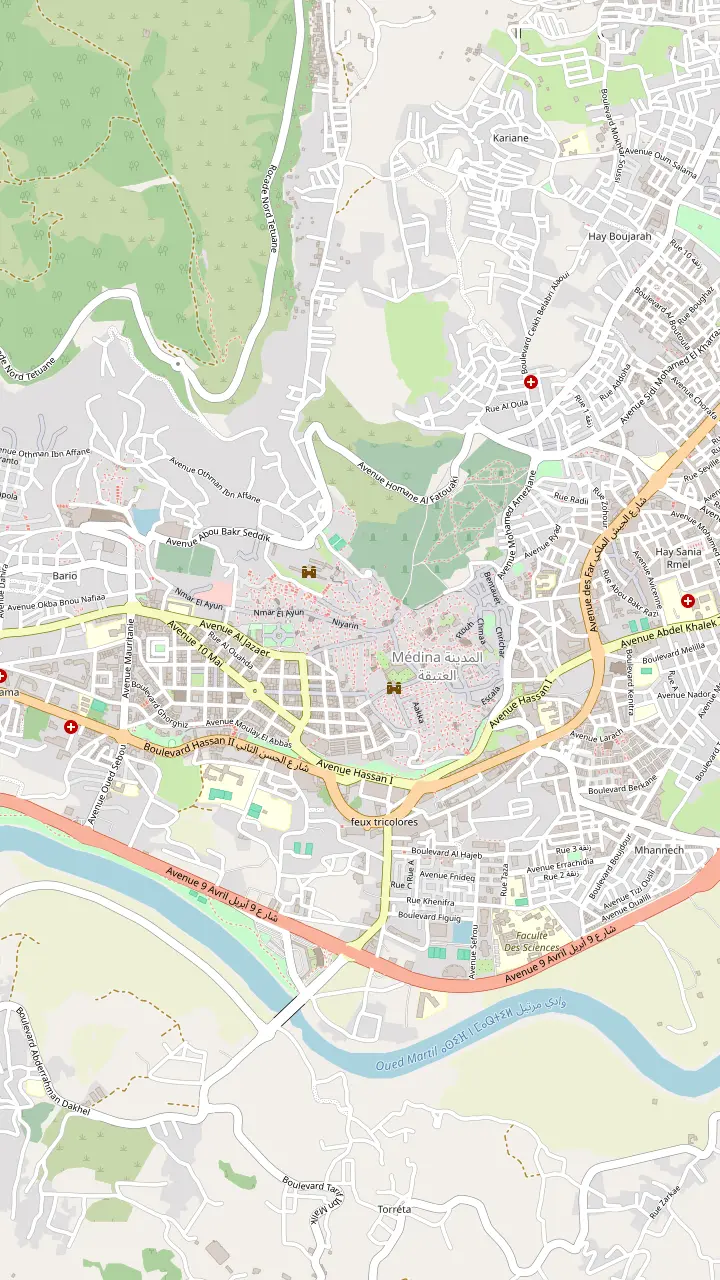
Bab El Oqla gives its name to a national museum in a fortress built around 1830-1831, with a garden, a zellige fountain and a terrace of cannons of Portuguese origin. Beside it stands the school of arts and crafts Dar Sanaa, which UNESCO names with the National Institute of Fine Arts as part of the fame of the city.
Google MapsPlace Hassan II is one of the open squares the main streets of the medina lead to, and the Tetouan guide listing names the King Palace Square among its stops.
Google MapsBab er Rouah is one of the 7 gates in the wall of about 5 km that surrounds the medina.
Google MapsThe archaeological museum was inaugurated on 19 July 1940, a few streets from the medina, and lists its hours as 10:00 to 18:00 with Tuesday closed.
Google MapsThe souks of Tetouan ring with the clamor of the markets and the beat of the craftsmen at work.
Google Maps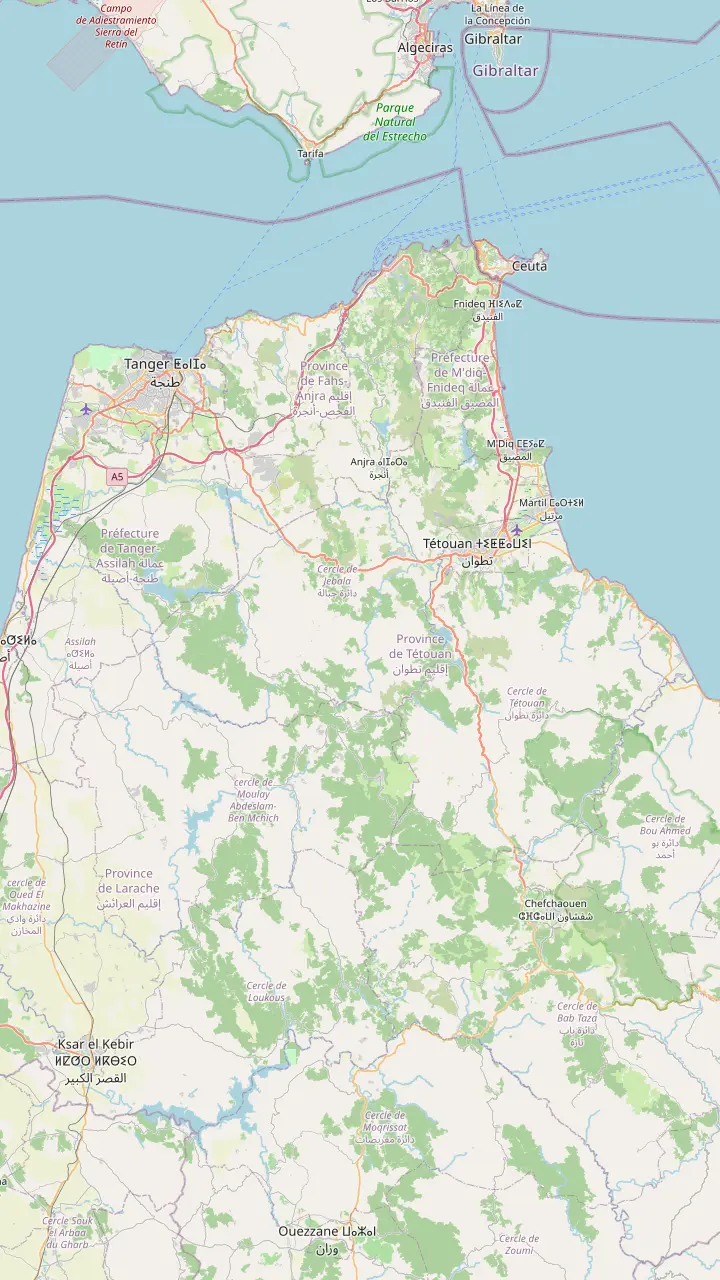
Tangier lies where the Mediterranean and Atlantic waters converge, and the tourism office lists Tetouan at about 1 hr from it.
Google MapsThe tourism office advises allowing 2 days for Tetouan, whose medina UNESCO listed in 1997.
Google MapsChefchaouen is listed at about 1 hr 15 min from Tetouan and about 1 hr 45 min from Tangier on the tourism office pages, which also give about 2 hr for the way from Chefchaouen to Tangier.
Google MapsMartil is the seaside day trip the tourism office lists at about 15 min from Tetouan.
Google Maps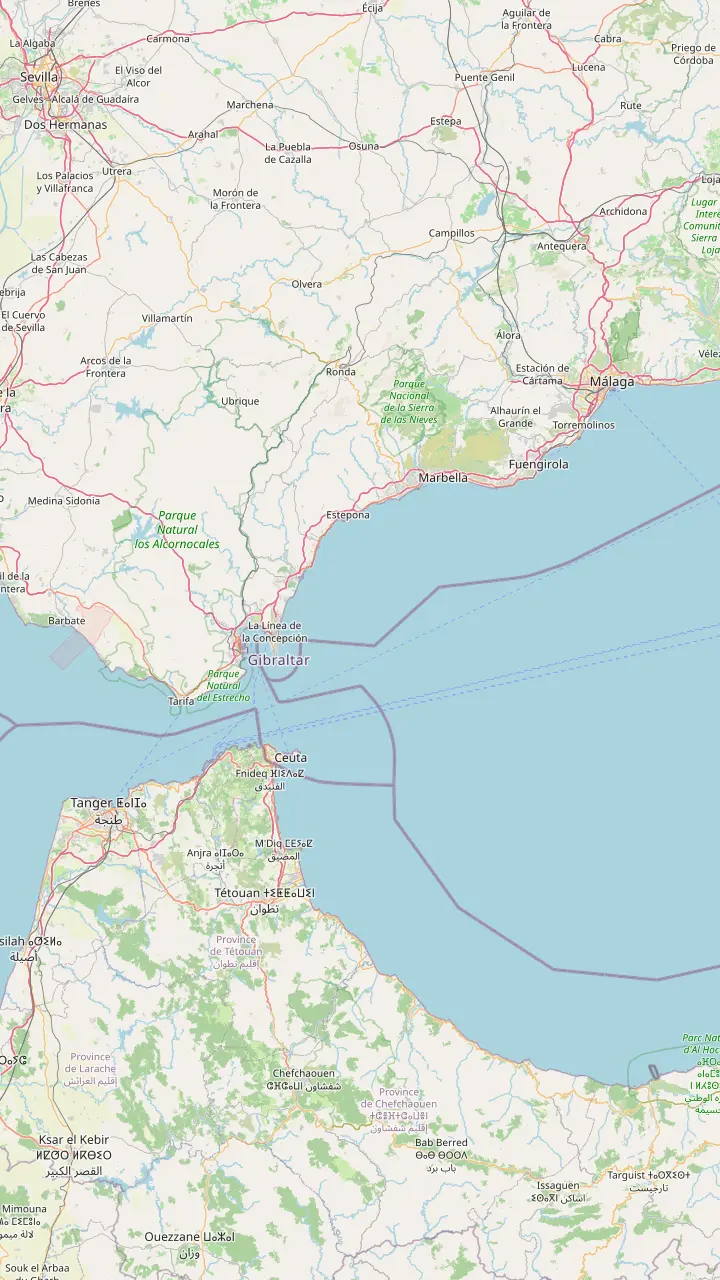
Malaga is the Costa del Sol city where one listed day trip to Tetouan begins.
Google MapsAlgeciras is a Spanish port on the Strait, named in one listing of a private Tangier day with a ferry ticket.
Google MapsTarifa is a Spanish port on the Strait, named in a listed Tangier day trip with lunch and a ferry.
Google MapsCeuta is the Spanish city on the Moroccan coast, north of Tetouan.
Google MapsTangier lies where the Mediterranean and Atlantic waters converge, and the tourism office lists Tetouan at about 1 hr from it.
Google MapsThe tourism office advises allowing 2 days for Tetouan, whose medina UNESCO listed in 1997.
Google MapsMaps © OpenStreetMap contributors
A walking order for the old town, what the two national museums hold, which crafts to look for and how a guided day from Tangier fits the visit.
Editorial team, tetouantour.click · Updated November 24, 2026 · 9 min of reading
The essentials
Most Tetouan tourist attractions sit inside the walled quarter, and that quarter is the reason the city earns a place on a day trip from Tangier. The national tourism office states that the medina is listed as a World Heritage Site,9 and UNESCO gives the date of inscription as 1997.1 Everything below is a way of reading that listing on foot: the gates, the squares, the museums and the workshops are parts of the same old town, and none of them is far from the others.
The story behind the listing is a story of both sides of the Strait. UNESCO says Tetouan mattered from the 8th century onwards as the main point of contact between Morocco and Andalusia,10 and that after the Reconquest the town was rebuilt by Andalusian refugees who had been expelled by the Spanish.11 The tourism office sums up the result by calling the city the daughter of Granada, with Hispano-Moorish footmarks.12 When a guide says a doorway or a fountain looks Andalusian, that history is what is being pointed at.
Size is the other half of the appeal. UNESCO rates the medina among the smallest in Morocco and, in the same sentence, as indisputably the most complete, with most of its buildings untouched by later outside influences.2 A small, complete old town is simple to keep in mind. A single walk along a main street between two gates teaches you the layout, and a second hour lets you look at the details instead of hunting for the way.
Side by side
| Stop | What it is | Hours or note |
|---|---|---|
| Bab El Oqla museum | A fortress with a garden and a zellige fountain14,22 | 10:00 to 18:00, Tuesday closed5,7 |
| Archaeological museum | Finds from Lixus and Tamuda23 | 10:00 to 18:00, Tuesday closed6,24 |
| Dar Sanaa | The school of arts and crafts25 | Ask locally about visiting |
| Place Hassan II | An open square on the main streets4 | Always open to the street |
| The gates | 7 gates in a wall of about 5 km3 | The entry points to the old town |
| The souks | Zellige, painted wood and jben26,27,28 | Busiest by day |
| Tamuda site | An archaeological site outside the lanes18 | Named on the tourism office list |
Opening hours are those the national museums foundation lists; the other rows are places and crafts the sources describe, so confirm anything you plan around on the day.5
UNESCO describes a historic wall of approximately 5 km in length around the medina, entered by means of 7 gates.3 The tourism office treats the gates as a sight in themselves, with the 7 doors of the medina on its list of places not to skip.18 Treat the gates as your compass. Each one opens into a different part of town, and an old town of this size is easier to cross once you know which gate you came in by and which one you want to leave through.
Inside, the plan is orderly. UNESCO says main streets link the gates to one another and lead to open squares and to public buildings such as funduqs, mosques and zawayas, and to the artisan and commercial districts.4 It adds that residential, commercial and artisan areas follow a clearly defined plan.19 In practice the street you stand in tells you what kind of quarter you have entered: a lane of shops, a lane of workshops or a lane of homes. A funduq is a traditional inn for merchants, so the word often marks an old trading street.
The medina developed on the steep slopes of the Jebel Dersa,20 so expect gradients. Lanes climb and fall, steps replace ramps in places, and comfortable shoes matter more than any guidebook. UNESCO dates the growth of the walled town from the beginning of the 17th century to the end of the 18th century,13 and gives conservation priority to the ramparts, the gates and the borjs, the fortified watch towers.21 Walls and towers are the parts of the town the listing puts first when it talks about repair.
Time in town
Hours as the listings state them: the combined day gives the Tetouan medina 1.5 hours and Chefchaouen 3.5 hours, and the Tetouan-only day gives 2 hours of guided visit and a lunch stop with free time takes 1.5 hours.
The map above works as a tourist map of Tetouan in pins, and the order below follows the lanes rather than the pin numbers. The pins run roughly from east to west. Start near Bab El Okla at the eastern end, where a national museum and the crafts school stand side by side, then move to Place Hassan II, where the main streets meet. Go on to the archaeological museum, and finish at the Bab Nouader souk, where the working life of the medina is loudest.
At Bab El Oqla the foundation that runs the national museums describes a fortress built around 1830-1831 with an inner garden, a fountain covered in zellige and a terrace where cannons of Portuguese origin are on show.14,22,31 Beside it stands the school of arts and crafts called Dar Sanaa, which UNESCO names, together with the National Institute of Fine Arts, as part of the fame of Tetouan.25 Together they give you the building and the craft tradition in one stop.
Place Hassan II is one of the open squares that the main streets lead to.4 The guided Tetouan day in the listings names the King Palace Square and the old Jewish quarter of Mellah among its stops, so both are worth asking a guide about. West of the square the archaeological museum was inaugurated on 19 July 1940, a few streets from the medina.16 The Bab Nouader souk closes the walk with the clamor of the market and the beat of the craftsmen at work.29
Pick your stop
Pick the line that matches your reason for coming and see which stop to head for.
If I want the history in one stop
The archaeological museum
If I want to see crafts in the making
Dar Sanaa and the souks
UNESCO names the crafts school, and the souks ring with the craftsmen's tools.25,29
If I want a fortress and a garden
The Bab El Oqla museum
A fortress of around 1830-1831 with a zellige fountain.14,22
If I have only a short stop
The gate, the square, the souk
The combined day gives the medina 1.5 hours.
If I want the sea as well
Martil or Tamuda Bay
The tourism office lists Martil at about 15 min.30
Ways in
The day sold here
Chefchaouen, then Tetouan
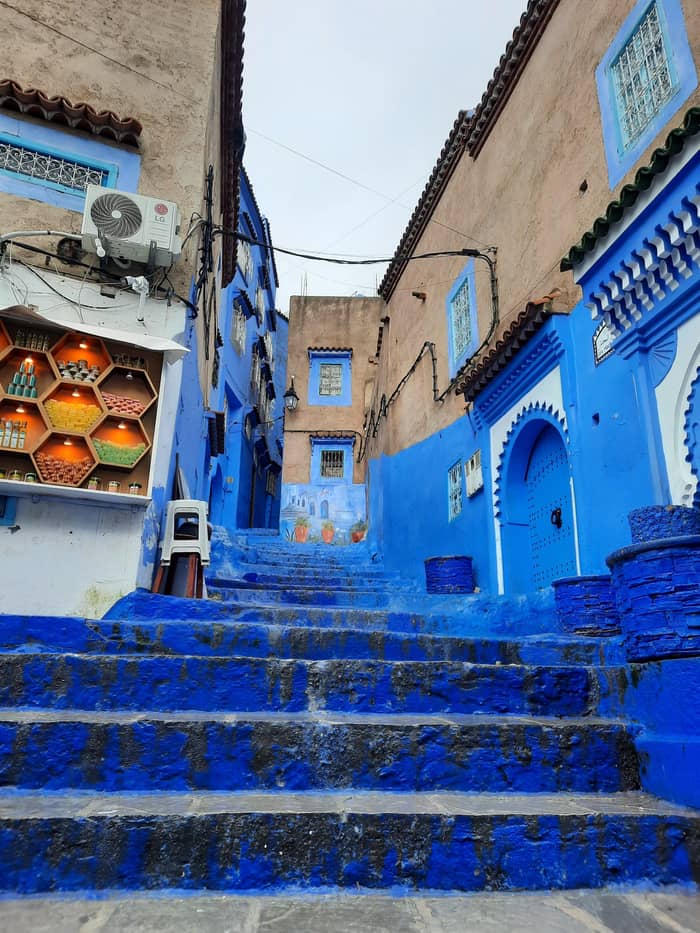
One city
A guide and a lunch break
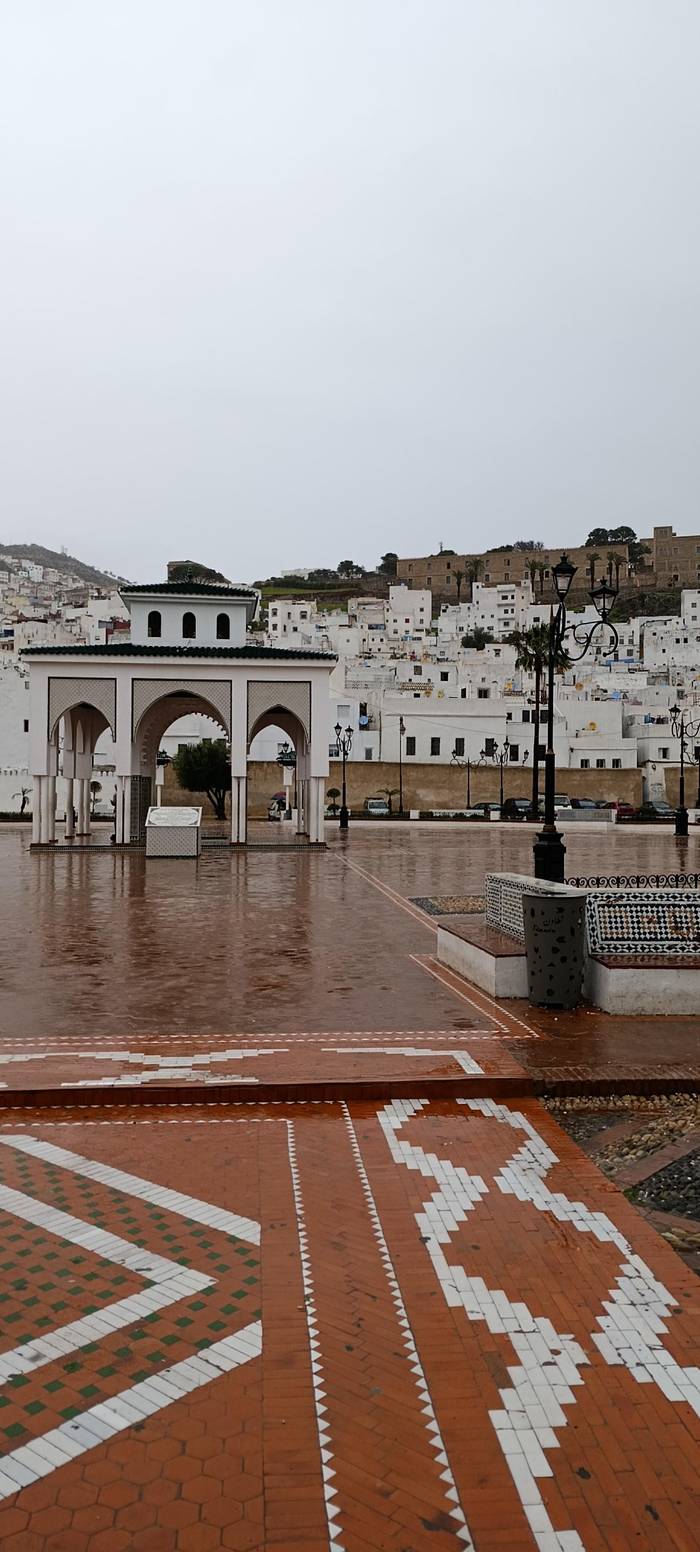
Free walk
Free time in the medina
The Bab El Oqla museum was created in 1928, and its present building, a historic fortress, was inaugurated on 29 July 1948 after the move.15,14 The foundation says the museum was closed for restoration and renovation from 2018 and reopened in January 2022.38,17 Among the collections it names Tetouan embroidery, which it calls one of the most original in Morocco.39 A visit rewards anyone who likes fabric, wood and tile, and the garden gives a calm break from the lanes.
The foundation lists the museum as open from 10:00 to 18:00 and notes that it is closed on Tuesday.5,7 The same page also says open Monday to Sunday, so the entry contradicts itself a little: on a Tuesday, check before you walk over. The tourism office says the old medina offers visitors an ethnographic museum and an archaeological museum, which protect the most precious treasures of the city.40 They differ in feel: the fortress is full of local craft, while the archaeological museum is a collection of finds.
The archaeological museum sits a few streets from the medina and was inaugurated on 19 July 1940.16 The foundation lists prehistoric, ancient and Islamic objects from sites in the north, including Lixus and Tamuda,23 and an Andalusian-style garden with Islamic funerary steles from the cemetery of Tetouan and a set of Roman amphorae.41 Its listed hours are the same 10:00 to 18:00, with Tuesday closed.6,24 It makes a good first stop before you decide whether to go on to the Tamuda site.
Price your day
Say how many are travelling and weigh the guided options.
Compare all 3 options
Say how many are travelling and weigh the guided options.
≈
View≈
View≈
ViewThese from-prices come from GetYourGuide and are converted using the ECB reference rate; the exact price shows at checkout.
The city's story
Early Islamic centuries
UNESCO says Tetouan served from the 8th century as the main point of contact between Morocco and Andalusia.10
After the Reconquest
Andalusian refugees expelled by the Spanish rebuilt the town, and its art and architecture show it.11
The expansion
UNESCO dates the expansion from the beginning of the 17th century to the end of the 18th century.13
The fortress
The Bab El Oqla fortress was built around 1830-1831 and later became a museum.14
The museums
The Bab El Oqla museum was created in 1928, and the archaeological museum was inaugurated on 19 July 1940.15,16
Heritage status
UNESCO inscribed the medina in 1997, and the Bab El Oqla museum reopened in January 2022.1,17
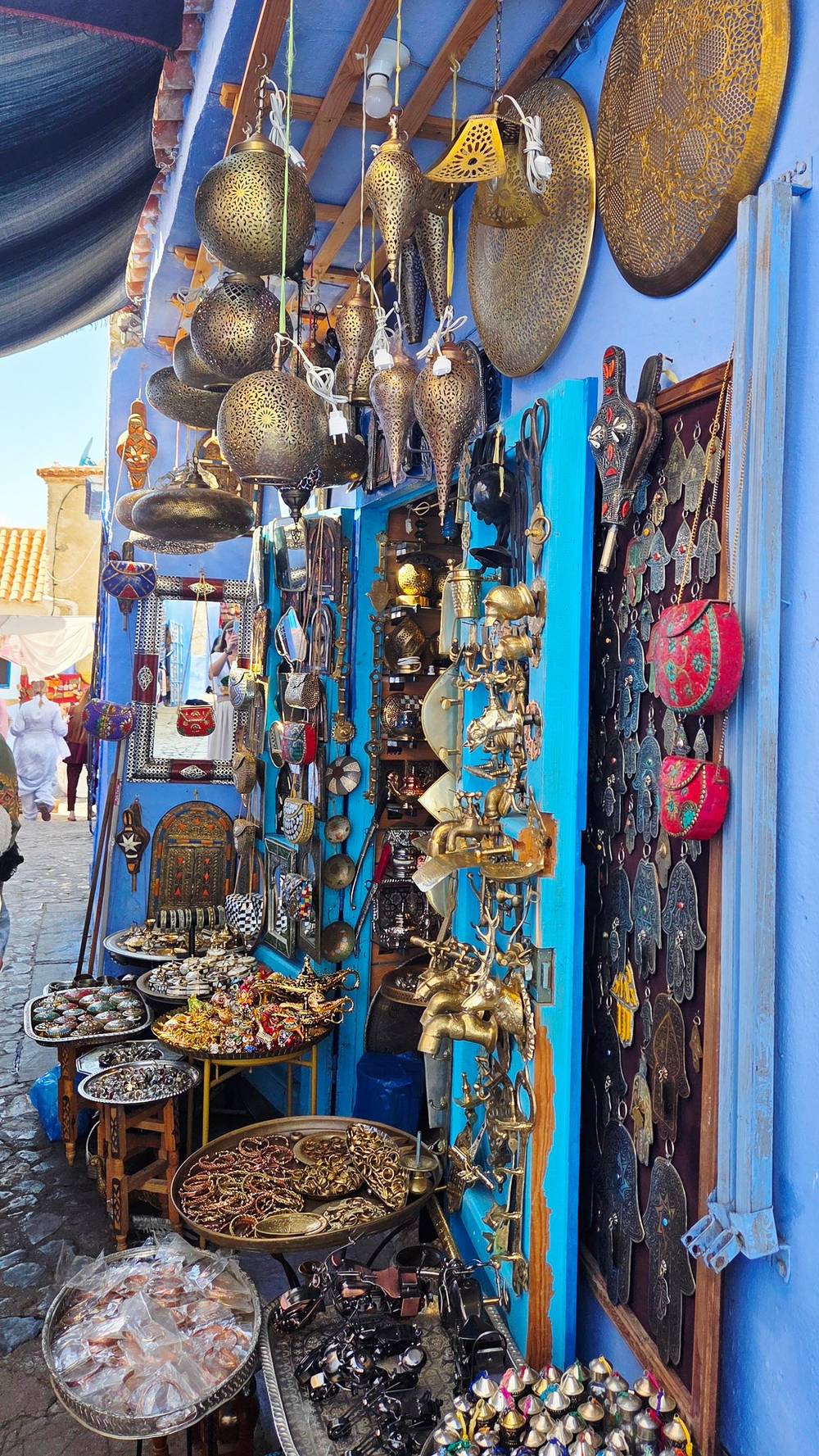
According to the tourism office, the craftsmen who work in the Tetouan medina turn out zelliges, the enamel tiles that give the city its fame,26 and that other artists paint wooden panels.27 You can see the same craft in place at the Bab El Oqla museum, where the fountain in the inner garden is covered in zellige.22 A zellige is a small hand-cut glazed tile set into geometric patterns, so a wall of them is a map of patience. Look at the joints and the repeating shapes, not only at the colour.
Textile and food complete the picture. The foundation calls Tetouan embroidery one of the most original in Morocco,39 and the tourism office points to jben, a white cheese wrapped in palm leaves that women bring to the city and that you can find in the souks.28 Jben is a fresh cheese, so it is something to taste at a stall rather than to carry for days. Ask the seller how it is eaten, and you will usually learn more than a menu could tell you.
The souks sound as busy as the tourism office describes them, with the clamor of the market and the beat of the craftsmen's tools.29 The same office lists Tetouan with Fez, Essaouira and Marrakech among the car-free historic towns it rates as best conserved,42 so the whole visit is on foot. Carry small change, ask the price before you pick something up and give yourself time: even the 1.5 hours that the combined day trip allows is enough to taste the place.
Video
Nathalie Kerrio on YouTube · The video only starts loading on your tap.
It is one of the smallest of the Moroccan medinas but indisputably the most complete and the majority of its buildings have remained untouched by subsequent outside influences.
Before you walk
Beyond the lanes, the tourism office points to the Tamuda Archaeological Site and to Our Lady of Victory Church as stops worth the detour.18 The archaeological museum ties the first to the town, because the foundation lists Tamuda among the sites its collection comes from.23 A visit to the museum is therefore a sensible first step before you decide whether to go out to the site itself.
The coast is a different kind of day. The tourism office says Tamuda Bay has 15 kilometres of coastline with water sports and a thalassotherapy centre,43 and it lists Martil at about 15 min from Tetouan.30 In its words the warm, blue waters of the Mediterranean border the city.44 A beach afternoon and a medina morning make a fair split for a longer stay, and the tourism office itself advises allowing 2 days for Tetouan.8
Inland, the Rif mountains form what the tourism office calls a splendid setting for hiking or trekking.45 That is one more reason Tetouan pairs naturally with Chefchaouen, which the same office lists at about 1 hr 15 min away.30 If you have only a day, the medina is the place to spend it. The coast and the mountains are the reasons to come back, and walkers who prefer a day outdoors to a day in the lanes should read that side of the region as a separate trip.
A UNESCO heritage tour of Tetouan is, in practice, a guided visit to the medina, and the listings from Tangier show how it is done. The combined day to Chefchaouen and Tetouan lasts 11 hours and gives the Tetouan medina 1.5 hours of guided visit and free walking, from $68. The Tetouan-only day lasts 6 hours, with the medina for 2 hours of guided visit and walking and then a lunch break with 1.5 hours of free time, from $44.
The choice is a trade between breadth and depth. The combined day buys the blue town of Chefchaouen along with the medina, while the Tetouan-only day spends the whole stop in one place with time to browse and eat. A guide earns the money in a medina this size, because gates, squares and the craft school are easy to walk past without knowing what they are. The UK page says to confirm that a medina guide wears an official badge and holds the local authority's permission,35 and the Canadian page says to hire only guides that a hotel, a travel agency or the local tourist authority recommends.46
Whichever you choose, the logistics matter. The Tetouan-only listing asks guests for a WhatsApp number to coordinate pickup, and the combined day collects guests from most Tangier hotels and homes. Free cancellation applies on both listings up to 24 hours before departure. For lodging inside the Tangier medina the combined day arranges pickup from a central meeting point, so read the confirmation message carefully. Fares are starting prices, so look up your own date on the booking page first.
FAQ
The tourism office's shortlist is the Tamuda site, Our Lady of Victory Church and the doors of the medina.18
It marks the museum, the crafts school, the main square, a gate and the souk, with a note for each pin and a link for directions.4
UNESCO says the historic wall of approximately 5 km is accessed by means of 7 gates.3
The tourism office advises 2 days, and the combined day trip gives the medina 1.5 hours.8
The tourism office lists Tangier at about 1 hr, and a guided Tetouan day lasts 6 hours.30
The UK page says to confirm that a guide wears an official badge and holds the local authority's permission.35
Sources
Planning a day trip to Tetouan or Chefchaouen? Ask a real person here.